The English Working Cocker
The Working Cocker is not a fashion, a colour, or simply a “smaller, sportier Cocker”. It is the expression of English Cocker Spaniel bloodlines selected generation after generation first and foremost to be good working dogs: nose, search, retrieve, intelligence, learning ability, balance and cooperation with people.
That different selection pressure explains the sometimes striking gap now seen between show-bred Cockers and genuine British working lines – not only in appearance, but above all in ability, temperament and the way they relate to their handler.
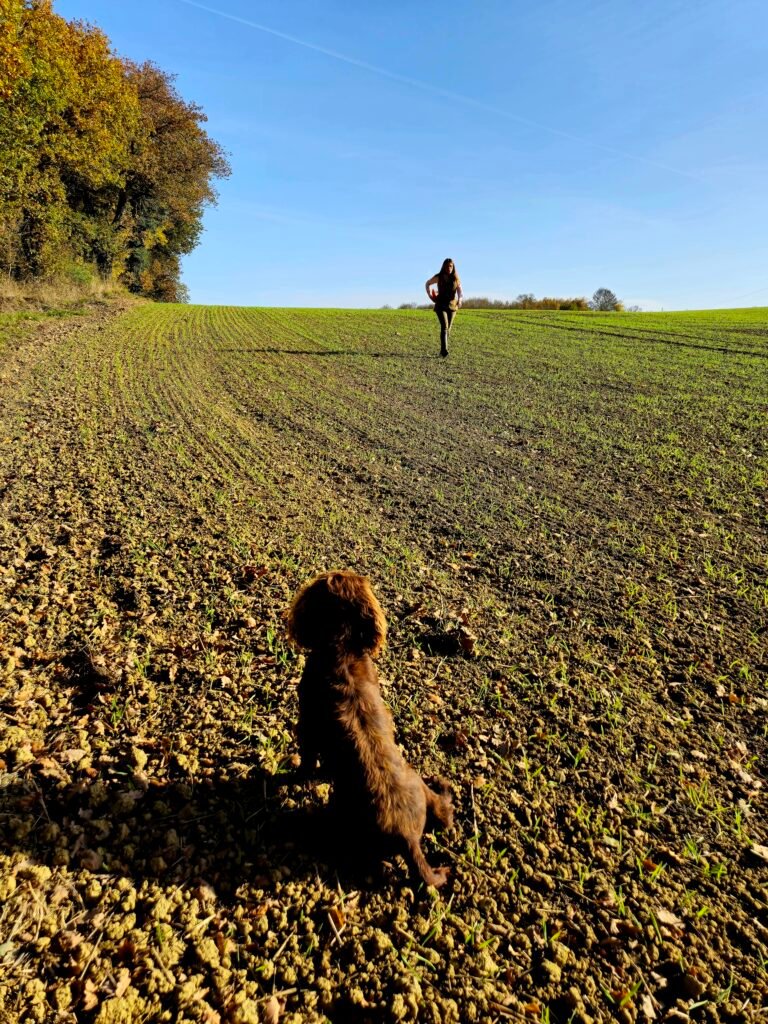
A Working Cocker is still an English Cocker Spaniel.
The Federation Cynologique Internationale recognises one breed: the English Cocker Spaniel, a British breed in the flushing-dog group and subject to a working test. “Working Cocker” therefore does not describe a second breed, but bloodlines in which selection has retained an exceptionally strong functional direction.
The same official breed, but with selection goals that have become markedly different.
The Cocker was historically developed as a gundog for searching, flushing and retrieving.
Breeding choices primarily favour the physical and mental qualities required to work well.
A “look” is never enough: genuine origin is read through the pedigree over several generations.
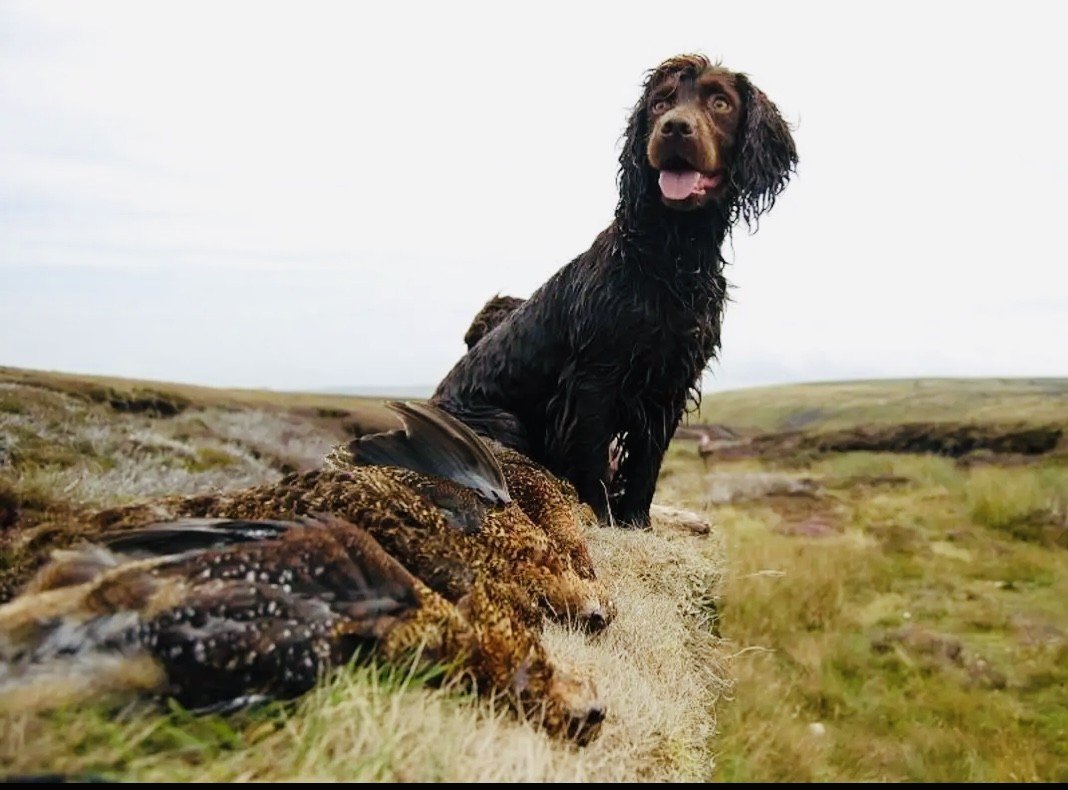
The Cocker was a working gundog before it became a show dog.
The Cocker Spaniel developed in Great Britain as a shooting dog. Its job was practical: hunt through cover, use its nose, push into dense vegetation, flush game and retrieve.
During the late nineteenth and early twentieth centuries, modern canine organisations developed. The Cocker became increasingly distinct from other Spaniels and the Cocker Spaniel Club was founded in Britain in 1902. Significantly, its historical aims embraced both breed type and shows, as well as Field Trials.
The two dimensions therefore initially coexisted. Over time, however, the paths diverged: some breeders increasingly selected for conformation and the show ring, while others continued to choose breeding dogs for field performance and working ability.
Show and working lines: the fundamental difference is what breeders choose to reproduce.
For more than a century, show lines have been selected primarily around morphological traits, whereas genuine working lines have continued to prioritise the athletic, functional and mental qualities needed to perform in the field.
Primarily selecting a morphological model.
Overall type, proportions, construction, head, expression, ears, movement, coat, feathering and consistency of type all become central considerations.
When dogs closest to a particular model are repeatedly bred over many generations, the population naturally becomes increasingly uniform in appearance.
First selecting a capable dog.
The first question is not “does he perfectly match the preferred aesthetic model?” but “is he good?”
Good at finding, using his nose, entering cover, retrieving, learning, taking initiative when needed, remaining connected to the handler and working with intensity without losing balance or control.
| Criterion | Working lines | Show / conformation lines |
|---|---|---|
| Primary objective | Functional and mental ability, real efficiency and cooperation. | Conformity to standard, type, construction and presentation. |
| Morphology | Often lighter, leaner, more athletic and more variable: form serves function. | More uniform, compact and standardised around the preferred model. |
| Coat | Often less abundant and less heavily feathered, practical in dense cover. | Coat and feathering are frequently more developed. |
| Temperament | Learning, initiative, biddability, intensity, control and connection to the handler. | Working performance is not necessarily the central selection criterion. |
| Variation | Accepted when the dog remains effective, healthy, balanced and functional. | Morphological uniformity is more strongly selected for. |
This comparison describes directions of selection, not two different breeds. Individual overlap exists, but selection pressure applied generation after generation explains the present-day divergence between the two populations.
Working Cocker morphology is largely a consequence of what the dog is asked to do.
The Working Cocker did not become lighter because a separate “working standard” declared that he should be light. Depending on the line, he became leaner, more athletic, less heavily coated and sometimes different in proportion because the dogs able to work most effectively were retained for breeding generation after generation.
A dog required to drive quickly through dense vegetation gains nothing from carrying excessive coat and feathering. A dog required to accelerate, stop, turn sharply, jump, search for hours and remain responsive to the handler benefits naturally from an athletic, functional body.
Conversely, repeatedly selecting a morphological characteristic can accentuate features that bring no working advantage. The pendulous ear conformation of the Cocker, for example, contributes to the breed’s recognised predisposition to ear disease. This does not prove that every show Cocker will suffer more otitis than every Working Cocker, but it is a useful reminder that an aesthetic trait is not necessarily neutral for function or health.
The most remarkable thing about a Working Cocker is not his appearance. It is his mind.
These dogs have been selected for many generations to work in close cooperation with people. That has shaped a particularly attractive combination: intelligence, curiosity, learning ability, initiative, devotion and a very strong desire to do things with their handler.
A natural link to the handler
The dog should take initiative without mentally leaving the person. Independence remains in the service of cooperation.
Quick to understand
He watches, learns rapidly, remembers and willingly works out a solution when faced with a problem.
The desire to work with people
This natural willingness to learn, cooperate and respond to the handler is one of the most appealing mental signatures of the breed.
A passion for finding
Scenting ability, perseverance, concentration and enjoyment of the search are deeply rooted in working selection.
Energy with a purpose
Speed, entry into cover and intensity should create efficiency – not aimless over-arousal.
Coming back to share
Retrieving beautifully expresses the desire to return to the person and complete the action together.
Intense, yet able to switch off
A good Working Cocker can give everything outside and then settle emotionally when the activity ends.
A very strong relationship
He loves to accompany, participate, understand and belong fully to the life of his human group.
Living within a group
The ability to live alongside other dogs and manage proximity, excitement and rest is also part of how we assess temperament.
Shooting is his history. Cooperation explains his extraordinary versatility.
A Working Cocker does not simply want to run. He wants to do something with someone. That desire to cooperate, combined with nose, intelligence and learning ability, allows him to thrive in many activities that depend on genuine partnership with people.
Shooting
Searching, hunting cover, flushing, retrieving and remaining responsive to the handler lie at the heart of his selection.
Detection & nosework
His scenting ability, persistence and natural enjoyment of searching make him an outstanding partner for detection work.
Agility
Explosiveness, mobility, speed of learning and attention to the handler translate naturally into canine sport.
Obedience & advanced training
His ability to understand and his desire to succeed with people make training exceptionally rewarding.
Family & children
When well bred, reared and socialised, he can be affectionate, playful, attentive and deeply involved in family life.
Living with other dogs
Working dogs have long lived and worked in multi-dog environments; sociability and stability within a group matter greatly to us.
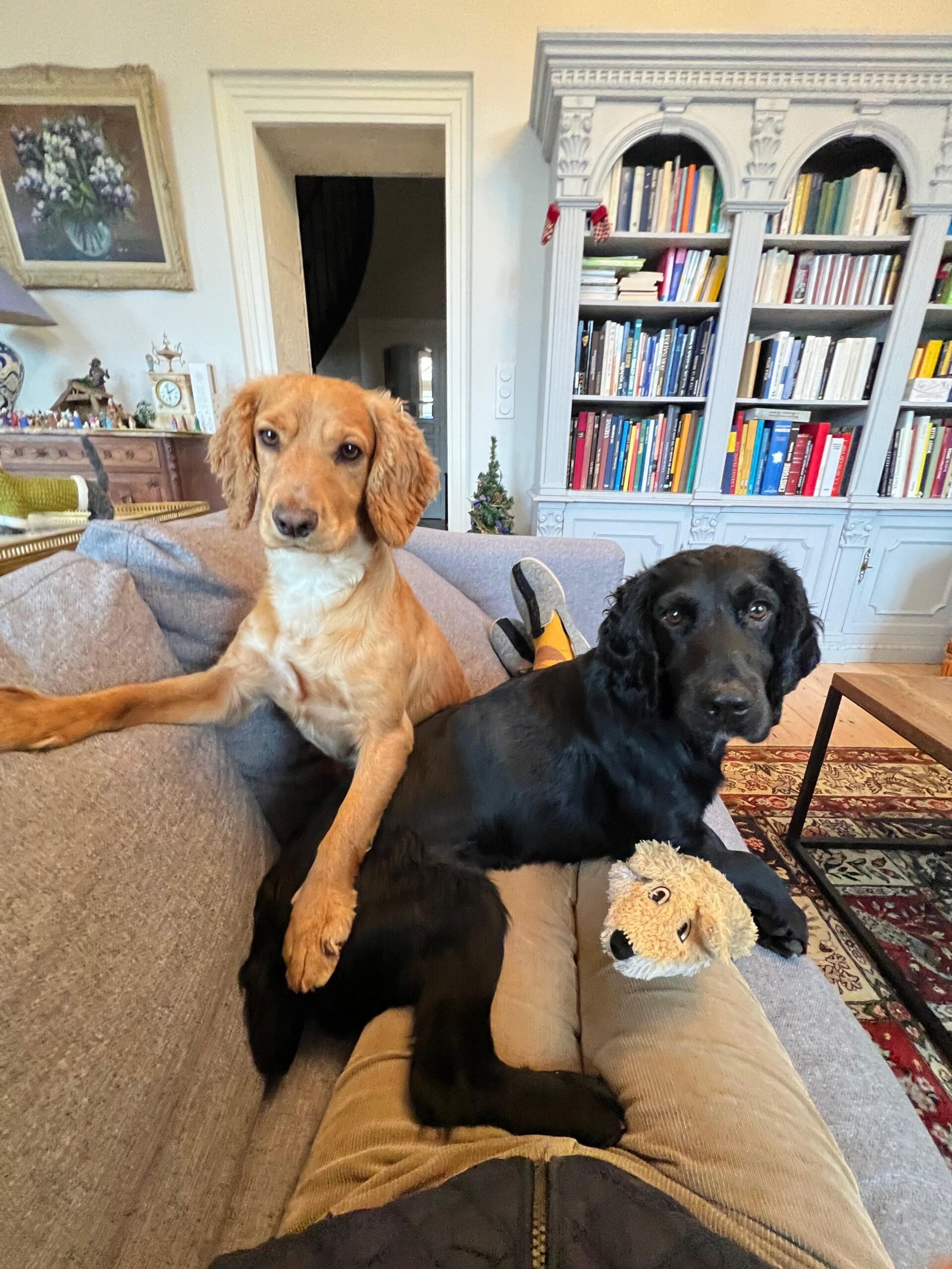
He does not simply want to live beside you. He wants to live with you.
Selection for cooperation has shaped dogs that are exceptionally attached to people. They enjoy taking part, accompanying, learning and understanding what is expected of them. In mentally balanced bloodlines, energy and intelligence do not distance the dog from family life – they enrich the relationship.
This is why everyday behaviour matters to us as much as field performance. How does the dog cope with frustration? Novelty? Rest? Children? Other dogs? Can he move from intense work to a quiet evening at home?
An outstanding British working pedigree can remain outside the French LOF stud book.
This is probably the most difficult point to understand when discovering the genuine Working Cocker in France. France requires an imported dog – even one already holding a recognised export pedigree – to pass a morphological confirmation before definitive entry into the French LOF stud book. Yet genuine Working lines have been selected for generations according to functional priorities that differ from the show type used for conformation assessment.
An export pedigree alone is not enough for definitive LOF registration.
The French Centrale Canine requires an imported dog to be presented to a judge for “confirmation au titre de l’importation”, even when the dog already holds an export pedigree issued in its country of origin.
The French process includes a precise morphological filter.
For the English Cocker, published non-confirmation points approved within the French breed system include general type, size limits, construction, coat and other physical characteristics.
Genuine, strongly working-typed British lines remain outside the LOF system in France.
The more exclusively a line has been selected for field function – with more athletic dogs, often lighter, less heavily coated, more variable in size and strongly field-bred in type – the further that model can sit from the one favoured in French confirmation.
This is not explained by an absence of pedigree. Quite the opposite: it is often the consequence of an old, documented British selection programme built around different priorities.
To understand a Working Cocker, you have to go back to his origins.
The LOF belongs to the French genealogical and confirmation system. A British working pedigree, by contrast, allows the reader to follow the actual history of the bloodlines, the dogs behind them and the continuity of functional selection.
In this specific context, being outside the French LOF is not evidence of having no pedigree, no selection or uncertain origins. Conversely, LOF registration alone does not demonstrate that a Cocker belongs to a genuine, continuous British working pedigree.
Other major European canine systems register imported pedigrees differently.
We would not claim that France is mathematically the only country in Europe without auditing every national rule. However, the French mechanism of morphological revalidation at import is particularly unusual among the major canine systems we have compared.
A label can be claimed. A genealogy can be demonstrated.
In France, “Working Cocker” is not a separate protected genealogical category and the expression can be used very freely. Being small, athletic, chocolate, lightly coated or having one British ancestor does not make a dog a genuine Working Cocker.
What is not enough
None of these points, taken alone, demonstrates continuity of working selection.
What knowledgeable people examine
A genuine working pedigree is read over several generations and on both sides.
A pedigree is not a decorative trophy. It is the memory of a breeding programme.
Kennel names tell the story of families of dogs. Some sires and dams transmitted exceptional nose, others speed, retrieving instinct, a particular hunting pattern, great handler sensitivity or remarkable temperament. A title is one piece of information; understanding the pedigree as a whole is another.
Go back several generations
One famous dog is not enough. What matters is continuity of working selection.
Identify the kennel lines
The kennels of origin tell you about the families and breeding decisions that shaped the pedigree.
Understand the qualities
Nose, search, speed, retrieve, intelligence, sensitivity and temperament are not distributed at random.
Read sire and dam sides
The value of a pedigree never rests solely on the sire or on one prestigious grandsire.
Relate pedigree to the real dog
Origins alter probabilities. The individual dog must still express the qualities expected from them.
Understand the mating
True breeding skill lies in knowing what you are trying to preserve, complement or strengthen.
Our work is to understand what each line can bring – and then combine those qualities intelligently.
We have chosen to work with genuine British working bloodlines. But importing a dog with an impressive pedigree is not, in our view, breeding selection. It is only the beginning.
Nose & search
Some lines interest us for scenting ability, perseverance and the way they read and cover ground.
Speed & intensity
Others contribute more explosiveness, commitment, mobility and power in action.
Retrieve & cooperation
We value the natural desire to return, share the action and remain available to the handler.
Intelligence & learning
Understanding quickly, remembering, adapting and taking the right initiative are qualities we want to preserve.
Balance & family life
A breeding dog must also be able to settle and live harmoniously with people, children and other dogs.
Complementarity
We do not believe in a perfect line: we seek pairings that can complement and reinforce the qualities of each parent.
We show ancestry, but we do not turn our breeding programme into a public catalogue.
The ancestors of our dogs are identified and we deliberately show the origins that demonstrate the genuine British background of our bloodlines. We do not, however, systematically publish complete reproductions of every official pedigree.
The real work of a breeder does not lie only in the names printed on a document. It lies in how those families are combined. Identifying lines, understanding their qualities, following what they transmit, knowing which combinations have worked, deciding which line may complement another, and then assessing the result generation after generation.
We therefore want to be transparent about the British origin and genealogical quality of our dogs, without turning years of research and selection into a public catalogue of every breeding strategy we use.
The quality of a working pedigree is understood across borders.
Despite the particular French administrative situation, our puppies attract enquiries from France, many European countries and well beyond. What these families value is not simply a label: it is our knowledge of different British lines and the way we combine their qualities.
This international demand is meaningful to us because it reflects less a French administrative label than the quality, coherence and originality of the breeding work itself.
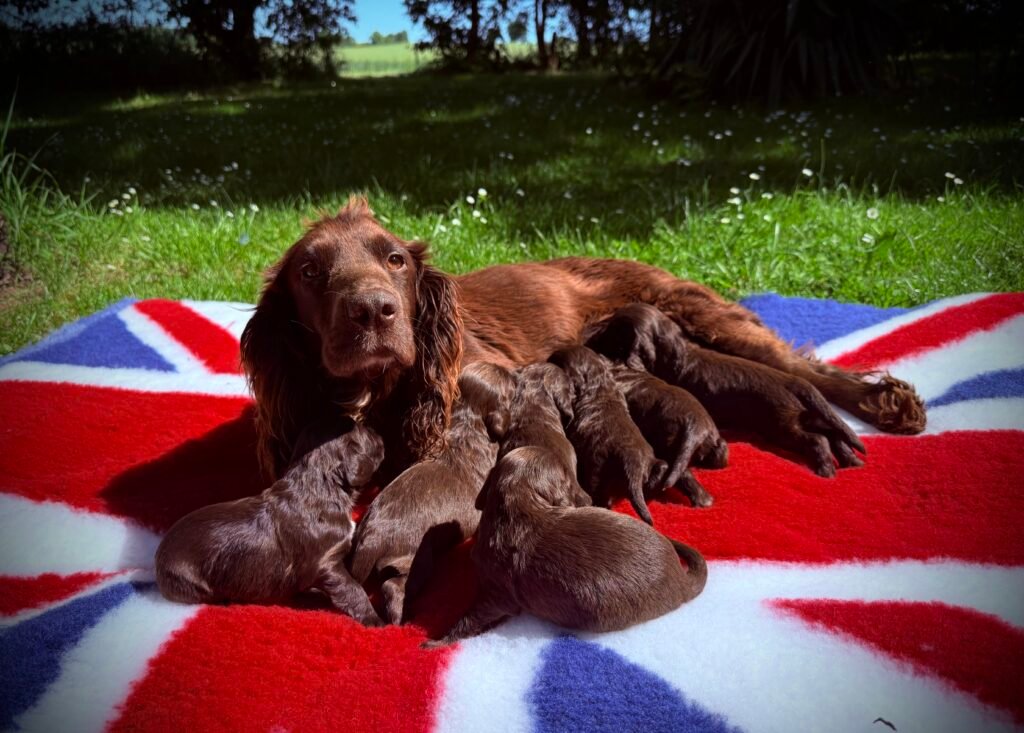
Running tests is not, by itself, the same as selecting well.
We would never select a dog simply because he works well. Health, longevity, behavioural stability and quality of life are integral to our breeding decisions.
Our breeding dogs from British lines come from programmes in which health screening is part of the work carried out in their country and bloodlines. But a health result remains one piece of information among many.
Selection means considering pedigree, relatedness, family history, phenotype, temperament, functional qualities and the characteristics of the proposed partner together. Our aim is to build matings in which health, function, temperament and genetics are considered as a whole.
Dipl. ECAR · EBVS® European Veterinary Specialist in Animal Reproduction
Close collaboration for breeding-dog health, reproduction, pregnancy monitoring, obstetrics, neonatology and the wider health of the dogs, as well as selected aspects of breeding strategy.
We are not trying to manufacture a “Working look”. We are trying to preserve what makes these dogs extraordinary.
Nose, intelligence, enthusiasm, stamina, mobility, learning ability, the capacity to understand and work with people, great devotion, joy of life, the ability to live with other dogs and that rare quality of being intensely committed at work yet deeply affectionate and settled at home.
We prefer dogs that are capable, intelligent, functional, balanced and deeply connected to people over dogs selected simply to match an aesthetic fashion.
Understand the dog before choosing one.
Is the Working Cocker a different breed from the English Cocker Spaniel?
Why can a genuine British Working Cocker remain outside the French LOF stud book?
If a Cocker is LOF registered and advertised as “Working”, is it necessarily from genuine working lines?
How can I check whether a dog really comes from working lines?
Is a Working Cocker necessarily hyperactive?
Do I need to shoot to live successfully with a Working Cocker?
Are Working Cockers suitable for children and multi-dog homes?
Why do you not publish complete copies of every pedigree?
Does an outstanding pedigree guarantee an outstanding dog?
A reference page should allow readers to check the facts.
The references below distinguish official and historical facts from our editorial interpretation and our practical experience of genuine British working bloodlines.
Understand the bloodlines before choosing the dog.
If your plans are built around genuine British working lines, we will be happy to discuss our dogs, our matings, the qualities we select for and the way we guide each family.